Southern California
Wednesday, June 29, 2011
Every locale seems to have its share of loopy lawyers advertising on TV and southern California of course is no exception. Ambulance chasers, firms looking for people to sign up for class actions against asbestos-mongers or purveyors of poorly designed bionic joints, people trying to help you get your Social Security benefits, and so on.
"We'll deal with the government. You have enough to worry about already." So says the guy with the ridiculous cowboy hat who, if he's a real lawyer, would be someone you'd be wise to steer clear of if you wanted to be taken seriously.
I was thinking about the idea of letting someone else deal with the government as I walked purposefully into the California Department of Motor Vehicles office in Pasadena this afternoon to get a driver's license. Based on my observations I believe Californians have a high tolerance for nuisance and annoyance, and they suffer a great deal of indignity in relative silence, at least until they reach their breaking point. Compared to their counterparts in the densely populated east they don't honk their horns very often, nor do they appear to bitch and moan a lot in public places. They wear shorts and sandals so much that I think it makes them feel like they're on perpetual vacation, and hence they're in a more relaxed mood. It's true that they do start complaining if the skies are cloudy and the temperature dips below 70 or goes above 85. But that's entirely consistent with vacation behavior. I guess since being in southern California is a lot like being on vacation, the thing to get upset about isn't the crowding and the traffic and the waiting, but the weather. Another factor to consider is that, like people who've gone to a vacation destination, Californians are more or less committed to being where they are, and don't really have many other choices. This country is all about choices--too many of them usually--but most Californians have already made their choice, to move here. You don't get fed up with California and say, "Hell with this, I'm moving to Minnesota!"
I had been warned that the California DMV would be a terrible experience. Common sense would tell you that in a county of 10 million within a state of nearly 40 million you'd expect some crowding in a DMV office, and that was indeed the case. The parking lot was full to overflowing and the inside of the building was packed. But to my surprise things went rather smoothly and were made tolerable by an absence of the pissing and moaning you would get if you were in the northeast. I'm not saying people were happy to be there, and indeed they might have been grumbling among themselves in Spanish or Chinese or Tagalog, but they were keeping it low-key, which I found to be admirable.
After filling out my form I got into a line that ran the length of the building. I was congratulating myself that it was moving right along until I began to hear a disembodied female voice calling out that such-and-such a number was being served at such-and-such a window, and I realized I was waiting in line just to get one of those numbers, not to be served. After twenty minutes I got my number and then sat for another forty-five waiting for my number to come up. Then a bored and semi-competent man processed my application behind a bullet-proof glass shield such as you would see in a convenience store in a blighted neighborhood, complete with the tray underneath through which I passed my paperwork. At that moment I caught a glimpse, I thought, of the limits of the tolerance of the California public. Additionally, here and there were signs indicating that it was a violation of the law to harass or attempt to intimidate a DMV employee. Finally, after getting my picture taken and passing a 36-question multiple choice examination covering the rules of the road I was awarded my temporary license, the real one to arrive in the mail in a few weeks.
The length of the wait, considering the hundreds of people who were jammed into the small office, wasn't bad. And as for the curt indifference of the staff, I would have been disappointed if they had tried to be more civil than they were. As a former state employee, I appreciate and understand curt indifference in a person who meets the public. We seem to be losing some of that in the private sector, and I guess this is one of those areas where the government has to step in and fill the gap. For instance, at banks the service has been getting more ridiculously cloying as time goes on. The tellers act as if they're your personal geishas instead of the people whose job it is to pay you almost no interest on your money while charging you enormous interest to borrow their money. I am much more comfortable with the coldness at the DMV. "We have what you want and we'll take our time giving it to you," is the message.
I was struck by how smoothly it went, all things considered. The California DMV has a decent system for handling an enormous polyglot population, including the option to make an appointment ahead of time to make your wait much shorter. But for a walk-in, an hour and a half total to obtain a driver's license once every five or ten years doesn't seem to me like that much of a sacrifice.
However, I should note that I am a veteran of many trips to the Connecticut DMV which, prior to its reformation in the late 1990s, employed what was easily the surliest and most unproductive bunch of bureaucratic thugs in the nation. And they're still pretty damned slow, albeit in a more chipper and polite way. I say that with only two other states to compare to Connecticut, but I nevertheless say it with absolute confidence. And of course things are much worse in other countries, I have no doubt. Indeed, maybe that's why the people at the California DMV are so patient--so many of them are from other countries, where without bribery or interminable red tape nothing gets done at all.
Which lets me mount another hobby horse of mine. Where's the everyday bribery in this country? Sure, there's organized crime and extortion galore; border guards get paid off and certainly cops are crooked throughout the land, but can someone slip a ten spot to a DMV employee and expect to get faster service? I doubt it. What's wrong with that picture? So much corruption in the billion dollar sky boxes and so little in the cheap seats.
Well there you go. Another California experience chewed, swallowed, and digested. After I've tuned up by waiting a few more times at the DMV, maybe I'll be ready to stand in line all night to get into The Price is Right. And then, who knows?
Wednesday, June 29, 2011


Tuesday, June 21, 2011
A River
Los Angeles County
Wednesday, June 22, 2011
There's a town in this string of communities running east away from northern Los Angeles along the San Gabriel Mountains and old Route 66 that I've become quite fond of. It's not the largest nor is it the prettiest. Its name is Irwindale, and I think it's probably the Rodney Dangerfield of this group of suburbs. Not known for upscale Craftsman-style homes on the one hand or for gat-wielding spray-painting gangbangers on the other, it is a huge string of gravel pits and industrial parks containing, incidentally, 1,422 citizens as of the last census.
To folks who live in rural Mississippi or the sleepy adobe pueblos of New Mexico, a town of over 1,400 might seem not only decent-sized but practically metropolitan. But here in the middle of a county of nearly 10 million souls, Irwindale, surrounded by neighbors with populations ranging from 25 to 75 thousand each, is small indeed. Small in permanent residents, that is, but great in the stuff of which the very infrastructure we take for granted is composed. For starters, a large percentage of the aggregate that goes into the concrete on the freeways of Los Angeles County comes from the quarries of Irwindale. And it is rich as well in other amenities, the sorts of things that folks who live on the florid avenues of nicer places disdain, but without which they couldn't drive home to spend sweet evenings among their roses and jacarandas.
Turning big rocks into little ones is certainly the most conspicuous of Irwindale's industries, with the ubiquitous Vulcan Materials pits and their long elevated Rube Goldberg apparatuses for carrying and sorting stones. But the streets of Irwindale are replete with small businesses and warehouses and distribution plants, tucked between which are numerous tiny, oily shops devoted to transmissions, auto electric systems, and new and used tires. Sprinkled throughout are places whose names contain that wonderfully reassuring morpheme "chem," their yards piled high with pallets of 55-gallon drums containing God knows what. And Irwindale is home to a company called Holy Spirit DME, Inc., catering to all your needs for durable medical equipment and incontinence supplies. In the name of the Lord. Plant nurseries also line a long stretch of Arrow Highway. And last but not least there's the massive MillerCoors brewery up by the freeway.
On the map Irwindale appears as a gerrymandered piece of real estate, probably just left-over spaces its neighbors didn't want. It was only incorporated in 1957, having previously been county land. So what the hell do I like about Irwindale? Well, all of the above for starters. My readers know I love urban blight as much as I cherish the unspoiled wilderness. In large part it is the sheer grey ugliness of Irwindale that attracts me. People drive through on the 210 or the 605 hardly knowing where they are, looking down on a vast lunar landscape of stone and craters. But also I love the fact that here is a place where shit can be obtained, and where shit gets done. It's comforting to know that if I need a used tire or a rebuilt transmission, or for that matter a huge container of industrial lubricant or a thousand tons of trap rock, Irwindale is there for me.
But there's one more thing. Just above the northern end of Irwindale is where the San Gabriel River comes tumbling cleanly down out of the mountains of the same name. This waterway, fed by snow melt and runoff from the hills, is mostly dammed up to form reservoirs for drinking water for the surrounding towns and for flood control. Along the often dry river bed, now returned in an unnatural way to its natural state and filled with native desert plant species, runs a terrific bicycle path, south out of mighty Irwindale itself, through Covina and El Monte and far beyond to the Pacific Ocean. After decades of industrial despoliation, I have no doubt, someone cleaned up the place and transformed it into a recreation area. The nicely paved path starts just off Foothill next to the entrance to the main Vulcan plant at Irwindale Avenue and makes its way up onto the Santa Fe Dam, a flood control barrier that cuts west across the riverbed just north of Arrow Highway. The dam is made of earth and rocks, no doubt quarried in the immediate vicinity. Riding across the top of it high above the city you have a beautiful view of all that makes Irwindale what it is--the roofs of the warehouses and factories, the gravel pits, the endless procession of little places featuring piles of rusting car bodies and engine blocks out back--the wretched refuse of the teeming shores of greater Los Angeles. It is a sight to behold.
I've been unable so far to find out anything about Irwin the man, or woman, after whom the city was named. Rumor has it that over the years Irwindale's employees have dabbled in corruption, blowing municipal money on junkets to New York and the like. But with so few people, how serious can it be? Most of the population are probably not property owners themselves. I'm assuming the lion's share of the city's tax money comes from the beer and stone and chemical companies and a few absentee landlords. What's a little graft among friends of that ilk?
In any event, on a clear evening the view of the San Gabriel Mountains from the center of unprepossessing Irwindale is just as beautiful as it is from the gleaming white Spanish colonial town center of Azusa or the bustling modern condominiumed boulevards of Duarte. Its roads are decent. It is refreshingly empty of fast food joints and expensive coffee shops and big box retailers. If you're looking for a truck body from the 1950s or a used radiator or a wiring harness for a 1975 Cadillac, look no further, Irwindale is the place for you.
And a river runs through it.
Wednesday, June 22, 2011
There's a town in this string of communities running east away from northern Los Angeles along the San Gabriel Mountains and old Route 66 that I've become quite fond of. It's not the largest nor is it the prettiest. Its name is Irwindale, and I think it's probably the Rodney Dangerfield of this group of suburbs. Not known for upscale Craftsman-style homes on the one hand or for gat-wielding spray-painting gangbangers on the other, it is a huge string of gravel pits and industrial parks containing, incidentally, 1,422 citizens as of the last census.
To folks who live in rural Mississippi or the sleepy adobe pueblos of New Mexico, a town of over 1,400 might seem not only decent-sized but practically metropolitan. But here in the middle of a county of nearly 10 million souls, Irwindale, surrounded by neighbors with populations ranging from 25 to 75 thousand each, is small indeed. Small in permanent residents, that is, but great in the stuff of which the very infrastructure we take for granted is composed. For starters, a large percentage of the aggregate that goes into the concrete on the freeways of Los Angeles County comes from the quarries of Irwindale. And it is rich as well in other amenities, the sorts of things that folks who live on the florid avenues of nicer places disdain, but without which they couldn't drive home to spend sweet evenings among their roses and jacarandas.
Turning big rocks into little ones is certainly the most conspicuous of Irwindale's industries, with the ubiquitous Vulcan Materials pits and their long elevated Rube Goldberg apparatuses for carrying and sorting stones. But the streets of Irwindale are replete with small businesses and warehouses and distribution plants, tucked between which are numerous tiny, oily shops devoted to transmissions, auto electric systems, and new and used tires. Sprinkled throughout are places whose names contain that wonderfully reassuring morpheme "chem," their yards piled high with pallets of 55-gallon drums containing God knows what. And Irwindale is home to a company called Holy Spirit DME, Inc., catering to all your needs for durable medical equipment and incontinence supplies. In the name of the Lord. Plant nurseries also line a long stretch of Arrow Highway. And last but not least there's the massive MillerCoors brewery up by the freeway.
On the map Irwindale appears as a gerrymandered piece of real estate, probably just left-over spaces its neighbors didn't want. It was only incorporated in 1957, having previously been county land. So what the hell do I like about Irwindale? Well, all of the above for starters. My readers know I love urban blight as much as I cherish the unspoiled wilderness. In large part it is the sheer grey ugliness of Irwindale that attracts me. People drive through on the 210 or the 605 hardly knowing where they are, looking down on a vast lunar landscape of stone and craters. But also I love the fact that here is a place where shit can be obtained, and where shit gets done. It's comforting to know that if I need a used tire or a rebuilt transmission, or for that matter a huge container of industrial lubricant or a thousand tons of trap rock, Irwindale is there for me.
But there's one more thing. Just above the northern end of Irwindale is where the San Gabriel River comes tumbling cleanly down out of the mountains of the same name. This waterway, fed by snow melt and runoff from the hills, is mostly dammed up to form reservoirs for drinking water for the surrounding towns and for flood control. Along the often dry river bed, now returned in an unnatural way to its natural state and filled with native desert plant species, runs a terrific bicycle path, south out of mighty Irwindale itself, through Covina and El Monte and far beyond to the Pacific Ocean. After decades of industrial despoliation, I have no doubt, someone cleaned up the place and transformed it into a recreation area. The nicely paved path starts just off Foothill next to the entrance to the main Vulcan plant at Irwindale Avenue and makes its way up onto the Santa Fe Dam, a flood control barrier that cuts west across the riverbed just north of Arrow Highway. The dam is made of earth and rocks, no doubt quarried in the immediate vicinity. Riding across the top of it high above the city you have a beautiful view of all that makes Irwindale what it is--the roofs of the warehouses and factories, the gravel pits, the endless procession of little places featuring piles of rusting car bodies and engine blocks out back--the wretched refuse of the teeming shores of greater Los Angeles. It is a sight to behold.
I've been unable so far to find out anything about Irwin the man, or woman, after whom the city was named. Rumor has it that over the years Irwindale's employees have dabbled in corruption, blowing municipal money on junkets to New York and the like. But with so few people, how serious can it be? Most of the population are probably not property owners themselves. I'm assuming the lion's share of the city's tax money comes from the beer and stone and chemical companies and a few absentee landlords. What's a little graft among friends of that ilk?
In any event, on a clear evening the view of the San Gabriel Mountains from the center of unprepossessing Irwindale is just as beautiful as it is from the gleaming white Spanish colonial town center of Azusa or the bustling modern condominiumed boulevards of Duarte. Its roads are decent. It is refreshingly empty of fast food joints and expensive coffee shops and big box retailers. If you're looking for a truck body from the 1950s or a used radiator or a wiring harness for a 1975 Cadillac, look no further, Irwindale is the place for you.
And a river runs through it.
Tuesday, June 14, 2011
O Lucky Man


Southern California
Wednesday, June 15, 2011
Somewhere in the history of just about all these towns in Los Angeles County is a rich man. More often than not it's a railroad baron--a Huntington or a Stanford--but sometimes it's a guy who made his money in another way. One such non-railroad mogul was Elias Jackson "Lucky" Baldwin, the man who once owned about half of the land comprising the present-day adjoining municipalities of Arcadia and Monrovia, just east of Pasadena.
Lucky Baldwin was, like nearly all the California white men of his day, born somewhere else. In the best tradition of the pattern of migration in this country, he originated in a place that was already considered part of the west when he was born--in his case Ohio--in 1828. From there his family inched farther west, into Indiana, and after that he wandered to Wisconsin.
Here I must interject a general observation: it is only by spending time on both coasts of the United States that one can fully appreciate the truly parochial outlook of not only its colonial founders and their heirs but also the denizens of its ultimate western terminus, as well as how truly "geographically challenged" many people are. I was born and grew up in what is called the Midwest, a vast chunk of land stretching from Ohio all the way to the Dakotas, and from the Canadian border down to the Missouri-Arkansas line. In terms of understanding the nation's geography, I think this gave me an advantage that east and west coasters either do not possess or have forgotten. Midwesterners have always understood that there is a great deal to the east of, say, Michigan--not just the Atlantic seaboard but the full width of the Appalachians and some more besides, as well as a practically separate nation to the south, below which finally is Florida, the happy hunting ground of those who spend a lifetime enduring what people like to call the Four Seasons. We Midwesterners also understand that to the west of us lies an almost interminable expanse of rugged and underpopulated plains and Rocky Mountains, at the far end of which is this little strip of desert oasis called southern California.
But dwell in New England, for instance, and you hear the damnedest things. Everything west of the Hudson River is some wintry, woolly place that starts with an "M"--nobody quite knows which states are which, nor does anyone care. All they know is that people ice fish and grow crops out there. Beyond all that stuff is California, which isn't nearly as far away as middle America, really, since it's only a six hour plane ride away. Californians have a similar attitude, in reverse. When you tell them where you're from they just whistle softly and say "Wow, you're a long way from home." You could be saying Kansas, Indiana, or Rhode Island, it doesn't matter. The only concrete eastern reality for most is New York City, which again is best understood in terms of the idea of 500 air miles per hour. Easterners, I think, can be more readily forgiven their ignorance; after all, they got off the boat and just stayed put. For most of my Connecticut friends a trip to Cape Cod, Massachusetts or Lake Winnipesaukee in New Hampshire is as epic a journey as any undertaken by Columbus or Amundsen. Many New Englanders did of course travel far to the west, but they did it in increments and didn't return to tell the tale, to explain in detail what's out there. To the easterner the middle of the country is all a vague mishmash of steel mills, Civil War battlefields, Grant Wood cornfields, and cowboys and Indians. But Californians really should know better, because most of them have been east. They were born there. It puts me in mind of something Wordsworth said:
Our birth is but a sleep and a forgetting:
The soul that rises with us, our life's star
Hath had elsewhere its setting
And cometh from afar:
Not in entire forgetfulness
And not in utter nakedness,
But trailing clouds of glory do we come....
The rest of the vast eastern portions of the country, so formative to their young lives and so essential to their natures, remains in the deep recesses of the minds of Californians as a sort of vague dream, which in the Pacific sunset fades so quickly from memory that they're left with only the most imperfect of impressions of the great playing field that lies between the two cultural goalposts of America. They learn to complain about weather that Minnesotans expect to experience only in heaven, and understand only dimly the idea of places without freeways and lots of electoral votes.
Well, back to old Lucky Baldwin, the Buckeye-Hoosier-Cheesehead. He finally came all the way west as an adventurer in his twenties, locating in San Francisco in 1852 shortly after the beginning of the gold rush. He opened a hotel and livery stable and dabbled in a few other business ventures. But his sobriquet of good fortune wasn't earned in the gold fields; rather, someone paid him a debt with several thousand shares in a silver mine in Nevada, worth pennies a share at the time. Soon thereafter, in 1859, the Comstock Lode was discovered, turning Lucky's investment into a fortune worth a few million dollars, back when that could buy you more than a small house in Beverly Hills. The fortune in fact enabled him to purchase, among other things, over 60,000 acres of land just northeast of the city of Los Angeles.
Today the City of Arcadia is the chief legacy of that purchase, including the Santa Anita Race Track, built on what was once Baldwin property. Baldwin himself built a track there in the early 1900s, but it burned down. The present track was reconstructed in the 1930s. Many places around here bear his name--Baldwin Avenue, Baldwin Park, Baldwin Hills.
Baldwin was also lucky (or unlucky depending on how you view it) in love. He had four wives and in addition was sued four times for breach of promise of marriage. In 1883 he was ignominiously shot in his own hotel (the Baldwin Hotel in San Francisco) by a jilted woman, but survived. Then about ten years later he was shot again, by the avenging brother of another injured party. Again he lived. Lucky finally died of old age in 1909.
In Arcadia there's a place called the Los Angeles County Arboretum and Botanical Garden, a really lovely 127-acre expanse developed on what was once the heart of Lucky Baldwin's estate. It is divided into sections featuring plants and trees from all parts of the world. Its rose garden is in demand as a venue for romantic, idyllic weddings. In the midst of it all, next to tiny Baldwin Lake, is Lucky Baldwin's 1885 Queen Anne style cottage, a beautiful example of heavily ornate high Victorian architecture, fully furnished inside with period pieces. The Arboretum has been used as a movie and television setting for decades, and inside the old carriage house adjacent to the cottage there's a detailed display of photos. They've shot everything there from old Tarzan movies to modern jungle flicks like Anaconda. They also shot the opening scene from Fantasy Island there, where Tattoo yells, "De plane, de plane," after which Mr. Roarke walks out of the Queen Anne cottage.
I suppose what makes a guy lucky, in retrospect, is whether people speak his name a hundred years after his death. By that standard Baldwin was fortunate. At one place in the historical displays inside the carriage house it lists his date of birth as April 31, 1828. That would make him pretty damned lucky, too, since he wouldn't have had to share that birthday with anyone.
Sunday, June 5, 2011
Earlier Than You Think


Southern California
Wednesday, June 8, 2011
One of the phenomena I have contended with since I've been in the Pacific time zone is the vague feeling that it is later than it really is. It has nothing to do with the sun; indeed the sun suggests that the time is or should be about what the clock says it is. I get up earlier, and I go to bed earlier, as if I were still in the east. Gradually and eventually I imagine this feeling will subside.
My theory is that this is from a lifetime of living in the Eastern zone where it's three hours later. After a while the body's ability to sense what time it is becomes synched to the "dominant" zone, the one in which one spends the majority of one's time. The more years in the zone, the more strongly the sense of it is built in. We are familiar with the general idea of being out of step with local time on a short-term basis, which we call "jet lag," but I don't know if I've ever read or heard anything about how it plays out in the longer term.
Last Sunday, June 5, the world was supposed to come to an end, completely. Lights out. Or as the poet Yeats said, "Black out. Heaven blazing into the head." Thus spake my friend the Only Begotten Son of God (hereinafter referred to as the OBSOG), the bearded denizen of Hollywood Boulevard, back in February. So on the morning of Monday the 6th, with the sun shining as usual here in California, I went looking for the OBSOG, not to challenge him or gloat--he was a rather sweet guy, and held the same views about the Republicans as me--but in the hope of a reasoned explanation of some kind. Besides, why should I revel in, or even take comfort from, the fact that all this is not going to end? Sometimes I look around and wish I could warm to the certitude of the crazed millennialists like Harold Camping and the OBSOG, or even regular garden variety Christians, regarding the eventual happy second coming. My own feeling on the subject is closer to the one I got the other night while sitting uncomfortably through the latest Pirates of the Caribbean movie, saying over and over, from about a third of the way through, "Well, it can't last forever." Not nearly soon enough, as it transpired. I had only seen the first of these cinematic turds, back in '03, and based on that was thinking this one might have something of a plot involving human beings. Wrong. I like Johnny Depp (and Keith Richards, who made a quick appearance in this one, too) and made the mistake of thinking it might be good because he was in it, rather than that he had become another of the many Whores of Babylon.
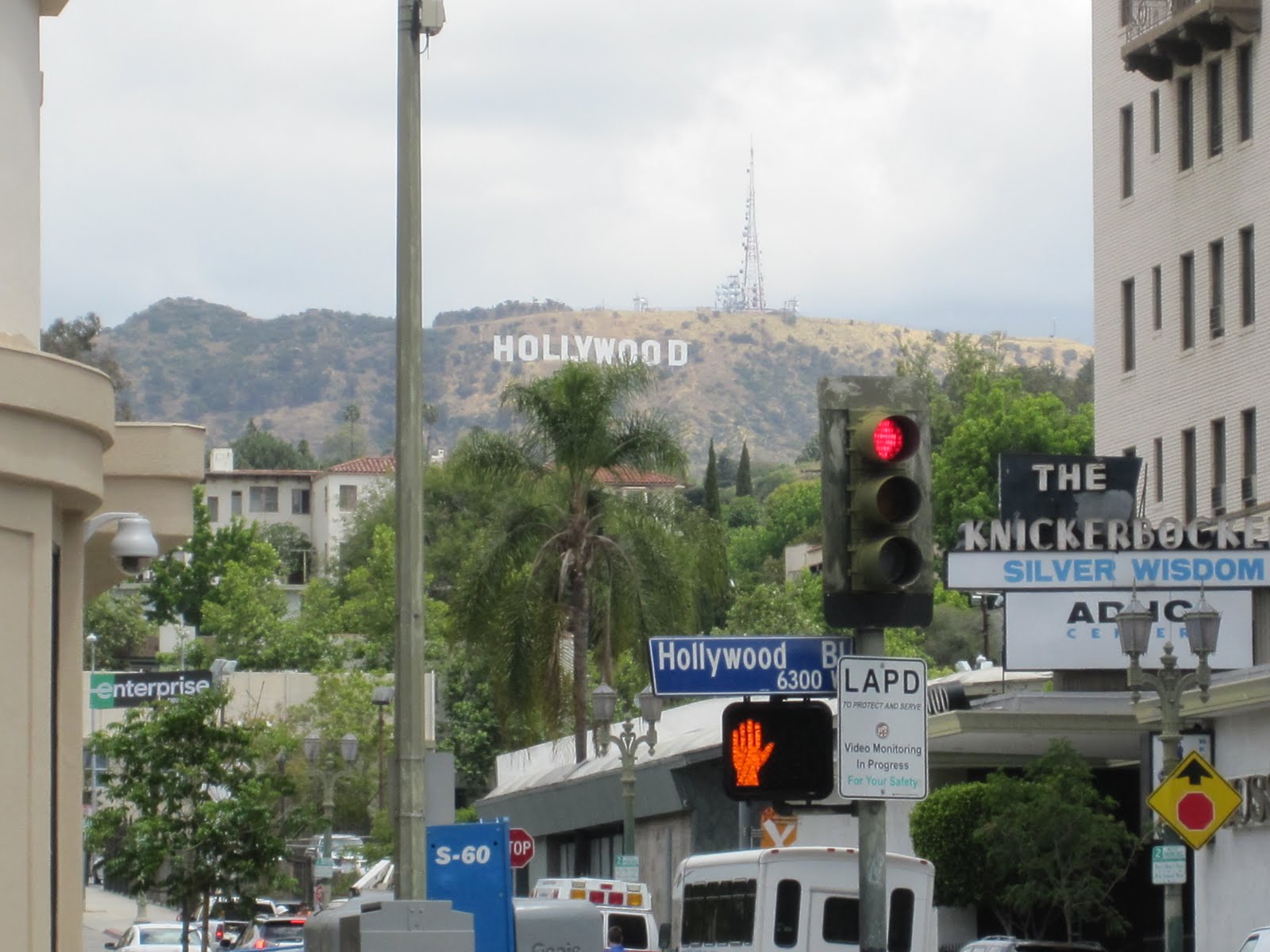
Anyway, bright and early Monday, at a little before noon, I locked my car in front of the Museum of Death on Hollywood Boulevard just west of Gower, where the two-hour free parking spaces end. I ambled west, past empty store fronts, dirty lingerie shops, and souvenir t-shirt stores, nearing the heart of the tourist district. Excited Germans paused on street corners to take one another's pictures with the HOLLYWOOD sign in the background. Around them ambled the human marginalia of this particular page of life--raggedy bag women, over-made-up costumed wackos, old gone wrinkled cowboys come to spend their golden years in whiskey and handouts. I looked for some sign of the OBSOG, maybe his pull-behind two-wheeled grocery cart packed with black plastic bags packed in turn with who knows what (standard issue for self-respecting street people), or his sign warning of the impending end of days. Eventually I decided to start inquiring about him among the people who looked as if they spent all day there, nearly every day.
The first person I asked was a huckster of indeterminate nationality, but probably from one of the southern Slavic countries or maybe Armenia. He said he knew who I was talking about, and that he usually hung out farther west, near Hollywood and Highland. Up at that intersection the second person I approached was a young good-looking Middle Eastern guy of about 30 who was selling tours of the homes of the stars. I asked him if he had seen "the End of the World guy," with the beard and the shopping cart. He knew the OBSOG by my description right away, but said he said he hadn't seen him for a week or so. "What's wrong?" he asked. I said that nothing was wrong, just that I wondered where he was today.
"Don't worry," he reassured me in his thick Arabic accent. "Nobody can say when is end of the world. Jesus no say. Mohammad no say. Ibrahim no say. Only God says. Have a good time, relax." I said I really wasn't worried about that, but merely wished to speak to the guy. I explained that he had predicted that the end of the world would happen yesterday. I could tell that although the Arab had rather enjoyed this momentary diversion, I was beginning to waste his time. And he was wasting mine.
Other reactions from the Hollywood tour and map-of-the-stars salesmen were predictably similar. There was, I sensed, a loose solidarity among the everyday folk of the boulevard. One young man asked me, laughing, if I was looking for him to get my life savings back. My first thought was to answer, "Do I look like a complete idiot?" Then it hit me. Of course I look like a complete idiot, to him and all the regulars. I look just like the rest of the goofy tourists from middle America and Europe who traipse up and down the street, gawking, taking snapshots, posing in front of the Chinese Theater with people dressed as Spiderman or Elvis or Shrek or Darth Vader. Why else would I even be here? On Hollywood Boulevard you're either selling or buying. And if by chance you should be wandering aimlessly, the Church of Scientology lies patiently in wait, a wolf among lambs.
Meanwhile, even absent the OBSOG, there was no shortage of religious types afoot. Near the Chinese Theater I passed a pair of amateur musicians playing softly while handing out tiny tracts identifying themselves as a German outfit predicting the end of the world in December 2012--12/12ers, I guess you could call them. Then, to my surprise, I came to a pair of young Mennonites, also handing out pamphlets, offering merely garden-variety Christian salvation, minus the imminent cataclysm. I stopped to talk to a young man of this persuasion, who informed me that a large group of them had traveled to Los Angeles to save souls, and were staying in a hotel. I said I didn't realize the Mennonites were evangelists, and he told me that at least his group was. The guys were mostly clean shaven and conservatively dressed, and the women wore full-length print dresses from which sensible gym shoes protruded, and little white lace bonnets on the backs of their heads. As in west Texas, I was struck by how homely they were--the girls especially. Inbreeding, I suspect. At one corner an a capella choir of about twenty of them earnestly sang hymns--regular church hymns I recognized from my own childhood. The voices, at least, were pretty. I paused and leaned against a palm tree and absorbed the sweetness of the sound, traveling back half a century in my mind.
When I got to Orange Street I asked another local, who told me that he knew of the OBSOG, but that I had ventured a bit beyond his territory, which he said was strictly between Vine and Highland, on the south side of Hollywood Boulevard. That had indeed been where I'd seen him on Oscar night. I began walking west again, carefully scrutinizing all the people with those shopping carts and huge plastic bags, ranging through the trash cans, looking for redeemable empties rather than redeemable souls. In a little courtyard set back from the sidewalk in front of some sort of cheesy museum I asked a homeless Japanese man if he'd seen my bearded End of the World guy. He was more precise than the others. "Not today," he said, his bloodshot eyes scanning me warily. "But last week." Why did I want to know? the eyes said silently. This man's information I instinctively took to be a bit more reliable than that of the tour people, because this guy probably knew where the OBSOG spent his nights, back on the side streets behind dumpsters. But I didn't want to invade anyone's home, only to see him here on the street, in his element. I did venture down El Centro to an alleyway, where the empty bottle and can people looked at me furtively, just as the residents of a suburban cul-de-sac might eye a scruffy stranger to their domain.
I didn't find the OBSOG this time, but I haven't given up hope. No doubt he's busy recalculating, not to mention revising his manifesto to accommodate the obvious fact that it's earlier than he thought it was. These things happen. Calculations, unlike the mighty adversaries in the battle of Armageddon, are only human.
Monday, May 30, 2011
Weather Report

Southern California
Wednesday, June 1, 2011
There's another deadline for the end of the world coming up this Sunday, June 5, according to my guy on Hollywood Boulevard. The Armageddon came the day before yesterday, May 30. After that, he says, you'll be hoping for the end of the world, what with the flooding, earthquakes, tornadoes, and all the other plagues that'll be descending on us for the six days to follow. Funny thing, though, the big news here is the sameness of the weather. Sunny, highs in the mid 70s to low 80s. The calm before the storm? Maybe the bad stuff isn't going to happen until the last second.
Which reminds me. All of us are aware of the latter-day phenomenon of weather hysteria, in which even the tiniest hint of impending inclemency causes the local weather folks to interrupt our regularly scheduled programming with dire warnings or at least to put a little box in the lower corner of the screen with the word "warning" or "watch" on it, diverting our attention from the picture. Some blame this on the advent of the Weather Channel, but I think it was part of a nationwide coup by weather people, always in the past relegated to third-place behind the news and sports people, to wrest time and attention from them by making the weather the news as often as possible. Another theory I heard for the increase in weather presence on TV is the advent of more sophisticated satellite weather tracking equipment. I do not believe this for two reasons. First, modern weather tracking equipment is no better able to predict the weather more than a day or so in advance than whatever old shit we had before. Now, as then, the best way to find out what the weather will be tomorrow is to call someone who lives a couple of states west of you. Second, the weather hysteria that grips the nation's local stations is most of the time not about actual storms, but about the possibility of storms. Rumors of storms.
You might be asking, why is he off on this tangent? Well, here in southern California they've taken weather hysteria to new and (perhaps appropriately) more dramatic levels. Here virtually any possibility of rain, even a gentle rain that droppeth like the quality of mercy, is deemed to be an impending storm. The other day it was raining outside, just like it does half the time throughout the nation. No high winds, no hail, no frogs, no blood. Just plain old rain, and not much of it, at that. The 11:00 a.m. newscast led with the story. They had a roving reporter stationed in a suburban town, interviewing people about the rain, for Christ's sake.
"Hi, I'm Rachel Hairspray, reporting from downtown Monrovia, where I'm talking to people about the rain. Sir, how is the rain affecting your day so far?"
"Well, I was, like, going to take a bike ride, you know? But dude, now I guess I'll have to do it some other day."
"Well, there you have it. This is Rachel Hairspray reporting from Monrovia, where the rain is turning out to be having a pretty big impact on lots of folks. Oh, and they say it might be raining this afternoon for your commute home, so be careful and expect some slow going. Back to you, Nancy."
Had you seen that telecast you would know that I wasn't exaggerating a bit. And telling people in the greater Los Angeles area to expect slow going during their afternoon commute is a little like telling an Eskimo to expect snow. And I would be remiss if I didn't mention that by the middle of the afternoon it had stopped raining.
Shifting gears again, Armageddon is an interesting phenomenon, subject to quite a bit of variation, depending on one's interpretation of the scriptures. For most it is the battle between Christ and Satan, following which Satan will be put in his place for a thousand years. For others it is whether their particular religion will be persecuted, or will triumph. It's a mishmash, at best. For many Armageddon is just shorthand for the day when the shit hits the fan, or at least begins to fly in the general direction of the fan. My guy in Hollywood's slim period of six days is a drastically truncated version of things, and suggests that he's of an independent turn of mind, although I suspect he might have broken away from the Jehovah's Witnesses at some point. This is just speculation, partially based on the text of his rambling handwritten manifesto, running to about thirty pages, in which he makes his predictions, all the while pointing out that the Antichrist is chiefly represented here in the U.S. by his minions in the Republican Party. My kind of guy.
Assuming his predictions don't come to pass in any readily discernible way (I wonder if it could all come to pass and be missed by practically everybody, like the posting of the order to destroy the earth to make way for a galactic highway in that Douglas Adams book?), I plan to go to Hollywood next Monday and try to find the Only Begotten Son of God, and seek out an explanation. Who knows, he might have one.
Sunday, May 22, 2011
After The Raptor

Monrovia, California
Wednesday, May 25, 2011
If you're reading this, chances are good that, like me, you weren't taken up into heaven in the Rapture on May 21, 2011, unless heaven is far different from what I conceive it to be, which is very possible. Nor were you swallowed into the bowels of the earth in the gigantic earthquake that rent asunder the crust of the planet.
I am happy to know that you're still here, because even if there are trials to come, say for the next five months--plagues, famine, pestilence--it'll be good to be in the company of friends while we rue the day our mothers brought us forth into this bitter vale of tears. Ruing always goes down better in company, although it can lead to some real mischief, too, as in the period of mass ruing that led to the rise of National Socialism in Germany. But hey, we've only got five months, so how bad can it get? Well, in the words of Clemenza in The Godfather, "Pretty goddamn bad. Probably all the other families will line up against us...." But I digress.
This guy Harold Camping, who had some people in a tizzy, now says the real end of the world won't come for five months, on October 21, 2011. Well, duh. Even amateur eschatologists know that the Rapture, when the dead in Christ rise and then the living who are saved go up into the clouds to join them, has to be followed by some sort of Tribulation, i.e., bad shit for all who remain. After that things get muddy, and time lines and predictions of specific results often vary widely and wildly, depending on whether you're a Dispensationalist Premillennialist, an Amillennialist, a Two-seed-in-the spirit Predestinarian, or whatever. My question to Camping is this: how do you know the Rapture didn't take place last Saturday, May 21, 2011, and the dead in Christ weren't taken up along with all the living who were worthy of going straight to heaven? Just because you didn't go? That's rather presumptuous. Have you checked inside any graves lately? Maybe the number of souls, living and dead, who get to go straight to heaven in the Rapture is so tiny in relation to the world's total historical population (say 144,000) that you didn't notice. One thing we do know, at least, Harold Camping, is that your sorry ass is still here, along with ours.
By the way, the word "rapture" comes from the same Latin root as the word "raptor." It has to do with being "taken up," the same way a giant predatory bird, or perhaps a dinosaur, takes up its prey in its talons. And metaphorically speaking, I suppose getting taken in by someone or some idea is quite a similar concept. We give our "rapt" attention when we are absolutely taken by what is being said or who is saying it. Same root word.
When one of my daughters was a little girl she went to Sunday school with a girlfriend of hers and saw a picture of an angel, wings spread, which had a profound effect on her. The impression she got was that if you went to that church, a giant bird would come and grab you and take you away. How far off was she, I wonder? Taken up, taken for a ride, taken in.
By which I don't mean to ignore my man on the streets of Hollywood, the Only Begotten Son of God, whose predictions haven't had a chance to play out yet. And let's face it, Hollywood usually does have the last word in these matters.
Wednesday, May 18, 2011
Are You Ready?

Monrovia, California
Wednesday, May 18, 2011
It's never too soon to start talking about the end of the world. When I was in Grand Rapids about a month ago I saw three trucks--motor homes, really--painted all over on the outside with the matter-of-fact statement that Judgment Day is coming on May 21st. "The Bible Guarantees It." Just cruising through town, evidently as part of a nationwide tour (begun out here in southern California) to win souls before it's too late, and to warn the rest of us to put our heads between our legs and kiss our asses goodbye.
That's only three days from now, and I feel as if I don't have a thing to wear, figuratively speaking. Of course I know that if it's true I'm screwed for all eternity--consigned to the pit of flame, and all that. But I take comfort in the old punchline that I'll be so busy talking to my friends I won't have time to worry.
Anyway, with the aid of some creative numerology and an interpretation of passages of the Book of Revelation, always a source of ambiguous but intriguing authority for anything scary as it relates to the wackoid fringe of the Christian religion in its many many forms, some "students" of the Bible have come up with May 21, 2011 as the beginning of the end, as it were. On this day the Rapture will take place, in which the already righteous will be taken up into heaven. You've probably seen the bumper stickers saying "In case of Rapture this vehicle will be without a driver." Irresponsible bastards, these saved people, but then I guess it doesn't matter to them or God what happens to the rest of us out on the highway who have to contend with empty cars careening across lanes of traffic and hurtling off bridges. "Fuck 'em if they ain't saved" is the message. Because let me tell you, what awaits the rest of us makes a few traffic accidents look pretty tame by comparison. According to the best authorities, a worldwide earthquake is going to take place, followed by plagues and locusts and suchlike that'll make sliding down a banister and having it turn into a razor blade an attractive alternative. Five months of that, then on October 21, lights out. I think, but am not sure, this period is so the more recalcitrant of us can have our arms twisted, perhaps literally, into accepting the gift of Divine Grace.
As you can see, for me (and lots of other folks, Dante Alighieri and Hieronymous Bosch included) the ascending into heaven and bathing in the divine light of God the Father Almighty isn't nearly as intriguing as the contemplation of the horrors that await the wicked and ungodly. The little imps with pitchforks, the swimming in the fecal soup, the burning in the fire but not being consumed, the writhing in torment. Insects. Monsters. Demons. Nonstop Lawrence Welk reruns. Worse yet, nonstop Glenn Beck shows.
And as if that weren't scary enough, there are web sites in which equally earnest scholars declare, unequivocally, that May 21st will NOT be the Day of Judgment, based on exactly the same source material. Talk about hedging bets. You live by the same crackpot scriptures, but interpret them differently, thus giving Jesus another chance in case things don't go down as planned this Saturday. That, my friends, is the basic mentality that keeps both the churches AND the casinos full.
I would be remiss, though, if I didn't mention that even among those who think the world is coming to an end very soon--like this year--there's a split of opinion as to the exact date. You'll recall that my guy in Hollywood, the one who said he was the only begotten Son of God and that the Republicans were the minions of Satan (whose credibility in my eyes is quite a bit greater than that of the dude with the vans and billboards) predicted the day of Armageddon to be May 30, 2011, and the Judgment Day to be June 5, 2011, a very busy and hellacious six days later. This gets confusing, because Armageddon is by some definitions supposed to be when Christ comes to defeat the Antichrist and set up 1,000 years of something or other, during or after which Satan will have another chance, I think, along the lines of when a defeated foe in WWE wrestling gets up after being pinned fair and square and blindsides the good guy and kicks the referee's ass in the bargain.
But even on the same mean streets of Hollywood on Oscar night there were afoot a band of folks who were predicting yet a different day for all this to happen. In their calculus it was to be May 21st at the straight up End of the World. No five-month, or thousand year, period of something or other.
All this is enough to make anyone's head spin, and I don't want to pit one specific group of delusional folks against another. My years of working in mental hospitals have taught me not to mess too much with people who are responding to otherworldly stimuli. I'll leave that work to Satan, the Prince of Lies, the Beast. But really, who would you believe--some smarmy preacher in a sharp suit, or the guy in the picture here? I mean, look into those eyes! The dude is ready! In the words of the blubbering Richard Gere in An Officer and a Gentleman, he's got nowhere else to go.
There's a larger question behind all this: Are You Ready? Not for the end of the world, or Judgment Day or the Second Coming. Are you ready for those things NOT to happen? It seems to me that expecting the end of things, for better or worse, has always been the easier alternative. Are you ready, instead, for things to keep being pretty much the way they are now? With prating demagogues and silly weather people and idiot talent show contestants on TV? With politicians in front of cameras asking forgiveness from the masses for things that don't concern them? With greasy food available dirt cheap on every corner? With Macbeth's "tomorrow and tomorrow and tomorrow," that "creeps in this petty pace from day to day, to the last syllable of recorded time"? If you can handle that, you're made of sterner stuff than the end-timers who wait for something magical to happen to make it all go away.
Tuesday, May 10, 2011
Hollow Men

Phoenix, Arizona
Tuesday, May 10, 2011
I spent last night in Roswell, New Mexico, a city I'd bypassed on the walk, mostly because going through it would have meant going some miles out of my way. But I was overdue to visit this town of odd repute, and since I'd been to Snyder, Texas earlier in the day and had entered New Mexico at Hobbs again, I figured this would be as good a time as any.
First I must report that the Boys of Snyder are doing fine. At 2:00 p.m. sharp I walked into Jaramillo's Mexican Restaurant and there they were--three of them, anyway--at their regular table. Tommy and Lonnie, the twins, and another guy they said I'd met before but whose name I can't remember now to save my life. George the token Democrat wasn't there due to the fact that he's busy selling off as much of the junk from his barn as he can to raise money, which he needs right now more than the junk. So the four of us had coffee and I talked about the end of the walk to L.A. Tommy said (and here you must imagine the accent and cadences of a thinner version of Slim Pickens), "We was jest talkin' about you the other day. We said we wondered how that walkin' feller was doin'."
At this point I felt, as I generally do, an obligation to regale them with tall tales of the road. Like a Marco Polo or Gulliver, I sorely wished I could speak of strange lands, strange food, strange people, fierce beasts. To tell of a meeting with the Great Khan, or of a sojourn in the land of giants or the world of Lilliputians. But alas my world, there on the long road of the dead land, the cactus land, going round the prickly pear, had revealed not much more to me than what they had been amidst all their lives. The food I loved the most, Tex-Mex, was their daily bread. What beasts I had seen, as fearsome as they might once have been, were flat dead on the roadside, the victims of modern technology. And as for the walking itself, well, even that had once been their lot, not for leisure of course, but yoked to the plow, or following behind the cultivators or pickers or gin trucks, from sunup to sundown, or as they say in the deep south, "from can to can't." What their quotidian lives had lacked in adventure they had more than made up for in the ardent desire for the late afternoon to be over, something I could certainly relate to. Now, like me, they were at rest.
I asked how the weather has been and whether they've got the cotton planted yet. The weather's been dry and unseasonably hot (it was pushing 100 outside as we spoke) and they don't have the cotton in yet. Tommy perked up a bit when talking cotton, just as I would if someone asked me about state sales tax. After that the conversation petered out and we sat there smiling and occasionally clearing our throats and saying things like "Yep" for a bit. Suddenly it seemed like a good time to take my leave, and I got up, promising to show up again some time. They reckoned they'd be there, unless, one of them ruefully added, they'd gone the way of Mr. Gomez. Gone, that is, the way of all flesh. Crossed to the twilight kingdom. I wondered, with Eliot,
Is it like this
In death's other kingdom
Walking alone....
On through the not-yet-planted fields I drove, the wind in the dry grass up along the dunelike barriers along U.S. 180, closing the window for the occasional dust storm, until I drew at last within the ambit of Roswell. On the way into town I had a flat tire just a few miles east of the city limits. Since the car is loaded to the gills I had to take a shitload of stuff out of the trunk and place it gently in a ditch, then fish out the donut, which was under everything else. But the operation was a success. By then it was too late to worry about getting another tire so I went straight to the motel, first passing the hospital, or the successor to it, where one of my cousins was born.
I have to say here that my interest in anything extraterrestrial is so low that I never seriously thought about visiting the Alien Museum, even for laughs, or doing anything other than to notice the strategic placement, on walls and fences, of those familiar triangular green alien faces with their black almond-shaped eyes that adorn the chamber of commerce and various cheesy businesses. The prototypical alien of the late 40s, born in the popular imagination only a couple of years before I myself arrived on planet earth. Since I'd recently driven through Oklahoma I decided I'd seen about enough of the truly odd and unearthly anyway.
Roswell is and was essentially a cow and oil town. The whole place smells like cow shit. The land east of the city is flat as a pancake and teeming with beeves. Before there were aliens there were cattle. After there were aliens there were cattle. This part of New Mexico is nothing but an extension of the flat wasted west Texas plains, and indeed was once part of Texas all the way west to the Rio Grande, before the Mexican War. So driving down the main street, past the courthouse, I got the sense that I was in just another of those dusty barren Last Picture Show venues. And that, I imagine, was pretty much all there was to it before whatever fancied close encounter occurred to augment the commercial potential of the city beyond the lure of the rodeo and the roundup.
Here's the thing that always gets me about these aliens, as depicted. It's the combination of solemnity and benignity behind their inevitable verdancy. That quintessentially 40s and 50s schlock movie look that says, "We come in peace, Earthlings. Take us to your leader." They're like us, only greener and with fewer digits, and for some reason known only to the creator of us all, bigger eyes. Well, it's becoming a greener world out there and everyone wants to keep their eyes open for ways to cash in on it.
In the end, whatever may have happened near Roswell seems to have done nothing more than to provide some relief for the locals from their lives of heat and dust, superimposing on the all-pervasive cow-plops another kind of bullshit. The arrival of the aliens was kind of like (but in a much more profitable way) my occasional appearances in Snyder, bringing some relief and a chuckle or two to those locals who sit around restaurants reminiscing, idly planning out their all too foreshortened futures.
This morning on the way out of Roswell, tire replaced, I got a last glimpse of what makes the town famous to the outside world, in the form of a large inflated alien atop the front entrance to a car dealership. It was green and serious, wearing a superhero-type cape and waving a hand that, in its obvious superiority, needed fewer fingers than do those of our dull sublunary bodies. Most significantly of all, I thought, the alien was hollow, waving slowly in the breeze that blew from the hilly grey-brown land west of town. It seemed to be saying nothing more or less profound to the passerby than "Howdy folks, come on in and buy a Honda."
Tuesday, May 3, 2011
Rougher Winds
Elk City, Oklahoma
Sunday, May 8, 2011
It's been a chilly spring so far in Michigan. I left for California yesterday and by evening the weather had changed and spring had advanced by several weeks. Then today, leaving from eastern Missouri, things got hotter fast. The A/C in my car has been out for several years and there was nothing for it but to keep the window open and my arm hanging out, absorbing the cooler air like the turkeys I used to raise did in the dead of summer when they would lie down and fan one large wing out on the ground, spreading their feathers like fingers to lose as much heat as possible. By late this afternoon I began to wonder who'd turned up the heat outside. Careening west on I-40 out of Oklahoma City at 70 mph the air coming at me over the side mirror felt as if it had been released from under the hood instead of wafting in from the great outdoors. When I got to the motel I checked the computer for the weather for Elk City, the little oil town where I'm staying overnight. Turns out it was 100 degrees, and tomorrow it will be even warmer. The wind is blowing in hard from Amarillo and points west. And no, it's not a particularly dry heat.
Tomorrow morning I'm going to drop south a couple of hundred miles from the interstate to try to visit the Boys of Snyder--Tommy and Lonnie, George, and that other guy whose name I can't remember. Mr. Gomez has moved on to the big Mexican restaurant in the sky. Got to get there while the gettin's good. Them guys ain't gettin' no younger. With luck I'll make it for the 2:00 coffee hour, then it's on across the dusty west Texas cotton fields toward New Mexico and another time zone. The coast beckons. I'll be covering familiar ground. Should be out there by Wednesday night.
Let me say a couple of things about Oklahoma before I sign off for the night. As you recall I didn't go through this state on the walk. I could have, and indeed it would have shortened the route to the Pacific, but after reading John Grisham's nonfiction book The Innocent Man I decided to avoid Oklahoma on general principles. It made even Mississippi seem sort of civilized by comparison, which, come to think of it, might have been Grisham's agenda. I'm not sorry about skipping it on the walk. Rodgers and Hammerstein notwithstanding, there seems to be very little to recommend this state, topographically, politically, culturally, and particularly religiously. It was conceived, after all, as a sort of gigantic concentration camp for Indians forcibly marched here from near and far during our national ethnic cleansing phase in the 19th century. Since then I'm pretty sure Oklahoma has done almost nothing to redeem itself. Oil, of course, is the life blood of the place, so the economy is doing pretty well. And gas is about 50 cents a gallon cheaper here than it was in Michigan yesterday morning, but that might be a coincidence. The native sons it brags about on its welcome signs, other than Will Rogers, are all country music singers. And Oklahoma has the nerve to charge you money for driving through, as if it were an Illinois or New York. If anyone out there knows any reason why the whole place shouldn't be flushed down the cosmic hopper, let me know.
Sunday, May 8, 2011
It's been a chilly spring so far in Michigan. I left for California yesterday and by evening the weather had changed and spring had advanced by several weeks. Then today, leaving from eastern Missouri, things got hotter fast. The A/C in my car has been out for several years and there was nothing for it but to keep the window open and my arm hanging out, absorbing the cooler air like the turkeys I used to raise did in the dead of summer when they would lie down and fan one large wing out on the ground, spreading their feathers like fingers to lose as much heat as possible. By late this afternoon I began to wonder who'd turned up the heat outside. Careening west on I-40 out of Oklahoma City at 70 mph the air coming at me over the side mirror felt as if it had been released from under the hood instead of wafting in from the great outdoors. When I got to the motel I checked the computer for the weather for Elk City, the little oil town where I'm staying overnight. Turns out it was 100 degrees, and tomorrow it will be even warmer. The wind is blowing in hard from Amarillo and points west. And no, it's not a particularly dry heat.
Tomorrow morning I'm going to drop south a couple of hundred miles from the interstate to try to visit the Boys of Snyder--Tommy and Lonnie, George, and that other guy whose name I can't remember. Mr. Gomez has moved on to the big Mexican restaurant in the sky. Got to get there while the gettin's good. Them guys ain't gettin' no younger. With luck I'll make it for the 2:00 coffee hour, then it's on across the dusty west Texas cotton fields toward New Mexico and another time zone. The coast beckons. I'll be covering familiar ground. Should be out there by Wednesday night.
Let me say a couple of things about Oklahoma before I sign off for the night. As you recall I didn't go through this state on the walk. I could have, and indeed it would have shortened the route to the Pacific, but after reading John Grisham's nonfiction book The Innocent Man I decided to avoid Oklahoma on general principles. It made even Mississippi seem sort of civilized by comparison, which, come to think of it, might have been Grisham's agenda. I'm not sorry about skipping it on the walk. Rodgers and Hammerstein notwithstanding, there seems to be very little to recommend this state, topographically, politically, culturally, and particularly religiously. It was conceived, after all, as a sort of gigantic concentration camp for Indians forcibly marched here from near and far during our national ethnic cleansing phase in the 19th century. Since then I'm pretty sure Oklahoma has done almost nothing to redeem itself. Oil, of course, is the life blood of the place, so the economy is doing pretty well. And gas is about 50 cents a gallon cheaper here than it was in Michigan yesterday morning, but that might be a coincidence. The native sons it brags about on its welcome signs, other than Will Rogers, are all country music singers. And Oklahoma has the nerve to charge you money for driving through, as if it were an Illinois or New York. If anyone out there knows any reason why the whole place shouldn't be flushed down the cosmic hopper, let me know.
Sunday, April 17, 2011
Rough Winds
Cedar Springs, Michigan
Sunday, April 17, 2011
As I sit here, more than halfway through April, snow is flying and the wind portends an imminent power outage. Ah, spring in Michigan. I thought the previous month was supposed to come in like a lion, and all that shit. Well, nothing's certain except death and taxes, the latter of which, incidentally, are due tomorrow.
All of which puts me in mind of the opening lines of one of Shakespeare's sonnets:
Shall I compare thee to a summer's day?
Thou art more lovely and more temperate.
Rough winds do shake the darling buds of May
And summer's lease hath all too short a date.
It would seem that England, like Michigan, promises nothing when it comes to warm weather, thus disappointing no one. My head is still in California, though, and this spring has been especially hard to get accustomed to, not to mention the fact that it's been late in developing into anything resembling spring. Well, I can see I'm on the verge of sounding like some aww shucks doofus human interest columnist for the local newspaper. We have Tom Rademacher here, but they abound throughout the country and you know who yours is, if you even read the paper any more. I'm amazed at how few people do. I set a good example for my kids when they were growing up, but none of them followed it, and none read newspapers. They get their news from other sources, no more or less believable, I suppose, but less consistent.
What I like about the Grand Rapids Press is its reliability and consistency. It is reliably and consistently Republican, which isn't a good thing. But just as you can compensate for a consistently inaccurate speedometer in your car by adjusting your speed up or down, you can compensate for a right wing newspaper by making certain mental calculations. You know, for example, that stories about Obama are never going to make him look good, being slanted, subtly or not so subtly, against him. By the same token stories purporting to objectively report on west Michigan's freshman congressman Justin Amash will fail to take into account that he's a certifiably paranoid far right geek. So, as with almost everything you see and hear, you make mental adjustments. You put your head down and do the sudoku, the word jumble, and the cryptoquip. You read Dear Abby and the medical advice column and find out which celebrities are having birthdays. That sort of thing. But as a newspaper, the Press will at least tell you if someone has been assassinated and give you a few salient details while sparing you the endless hours of utterly irrelevant hairspray-fueled drivel you'd get on television.
Another thing I'll say in favor of the Grand Rapids Press is that its editorial slant is Republican in an almost old fashioned way that makes it comparatively free of the shrill nonsense you get on Fox or CNN, for example. It's as if the very steadiness of the conservatism of the newspaper has kept it from moving too far to the right. It seems stuck in a time warp along with the likes of Bob Dole or George H.W. Bush, guys who, in the harsh weird light of Sarah Palin and Donald Trump look, if not good, then at least less horrifyingly cartoonish.
Any newspaper serving the Grand Rapids area must after all cater to its core constituency, which is, unfortunately, a pack of evangelical Christians. To understand this I keep reminding myself of the cultural heritage of the region, especially Kent and Ottawa Counties. That heritage, as I pointed out in one of the earliest posts on this blog, is rather odd and narrow in scope. The Dutchmen who came here in the middle of the 19th century weren't Dutch in any way that resembles the Netherlands of today, or for that matter the Netherlands of those days. They were genuine religious fanatics--people you could pretty accurately liken to the outcast English Puritans or the Mormons wandering across the country in search of a homeland. Their brand of Calvinism was far more conservative than that of the already hidebound official Dutch Reformed Church. Combine that with the fact that they were mostly farmers and outlanders and not sophisticated urbanites, and you have a recipe for some pretty backward thinking. To exacerbate matters, when they got here they began splintering into ever more conservative groups, religiously speaking, becoming increasingly exclusive and fundamental and insisting on strict adherence to the Bible and the catechism. One thing that particularly rankled these so-called Secessionists was the idea of "open communion." Well, you get the picture. And like the 17th century New England Puritans and many groups of Islamic and Christian fundamentalists today, they looked to their fanatical clergymen for more than mere religious leadership.
The result of all this is that west Michigan carries on its shoulders the heavy legacy of religious intolerance. The normative expectations of this area are weighted in favor of racial, social, religious, and political exclusivity--vestiges of the thinking of this bunch of stubborn Dutch hicks and bluenoses who made their homes here well over a century and a half ago.
The most notable thing about such a legacy is that the locals, especially those who don't get off the reservation much, really don't know the difference. West Michigan might as well be the center of the universe for all they know, and its God-fearing mean-spirited business-at-all-costs values are taken utterly for granted. Anything southeast of Lansing they refer to as "Detroit," regarding it as a sort of Satanic jungle filled with commies and dark-skinned malingerers. Outsiders, however, know west Michigan well for what it is, and conservative politicians and businessmen have long appreciated Grand Rapids and its environs as a friendly region in which to give ugly political speeches and launch campaigns against the public welfare with the full support of local Bible-thumping colleges and that little cadre of social Darwinists--the Van Andels, the De Voses, the Prince family--that dominates the financial elite. I imagine Republicans see Grand Rapids very much the way the Nazis saw Munich back in the early 1930s.
Standing out oddly in the midst of all this moral depravity is the City of Grand Rapids itself, whose largely non-Dutch population keeps it Democratic and whose mayor, George Heartwell, is that rarest of birds hereabouts, a reasonably liberal preacher.
Sunday, April 17, 2011
As I sit here, more than halfway through April, snow is flying and the wind portends an imminent power outage. Ah, spring in Michigan. I thought the previous month was supposed to come in like a lion, and all that shit. Well, nothing's certain except death and taxes, the latter of which, incidentally, are due tomorrow.
All of which puts me in mind of the opening lines of one of Shakespeare's sonnets:
Shall I compare thee to a summer's day?
Thou art more lovely and more temperate.
Rough winds do shake the darling buds of May
And summer's lease hath all too short a date.
It would seem that England, like Michigan, promises nothing when it comes to warm weather, thus disappointing no one. My head is still in California, though, and this spring has been especially hard to get accustomed to, not to mention the fact that it's been late in developing into anything resembling spring. Well, I can see I'm on the verge of sounding like some aww shucks doofus human interest columnist for the local newspaper. We have Tom Rademacher here, but they abound throughout the country and you know who yours is, if you even read the paper any more. I'm amazed at how few people do. I set a good example for my kids when they were growing up, but none of them followed it, and none read newspapers. They get their news from other sources, no more or less believable, I suppose, but less consistent.
What I like about the Grand Rapids Press is its reliability and consistency. It is reliably and consistently Republican, which isn't a good thing. But just as you can compensate for a consistently inaccurate speedometer in your car by adjusting your speed up or down, you can compensate for a right wing newspaper by making certain mental calculations. You know, for example, that stories about Obama are never going to make him look good, being slanted, subtly or not so subtly, against him. By the same token stories purporting to objectively report on west Michigan's freshman congressman Justin Amash will fail to take into account that he's a certifiably paranoid far right geek. So, as with almost everything you see and hear, you make mental adjustments. You put your head down and do the sudoku, the word jumble, and the cryptoquip. You read Dear Abby and the medical advice column and find out which celebrities are having birthdays. That sort of thing. But as a newspaper, the Press will at least tell you if someone has been assassinated and give you a few salient details while sparing you the endless hours of utterly irrelevant hairspray-fueled drivel you'd get on television.
Another thing I'll say in favor of the Grand Rapids Press is that its editorial slant is Republican in an almost old fashioned way that makes it comparatively free of the shrill nonsense you get on Fox or CNN, for example. It's as if the very steadiness of the conservatism of the newspaper has kept it from moving too far to the right. It seems stuck in a time warp along with the likes of Bob Dole or George H.W. Bush, guys who, in the harsh weird light of Sarah Palin and Donald Trump look, if not good, then at least less horrifyingly cartoonish.
Any newspaper serving the Grand Rapids area must after all cater to its core constituency, which is, unfortunately, a pack of evangelical Christians. To understand this I keep reminding myself of the cultural heritage of the region, especially Kent and Ottawa Counties. That heritage, as I pointed out in one of the earliest posts on this blog, is rather odd and narrow in scope. The Dutchmen who came here in the middle of the 19th century weren't Dutch in any way that resembles the Netherlands of today, or for that matter the Netherlands of those days. They were genuine religious fanatics--people you could pretty accurately liken to the outcast English Puritans or the Mormons wandering across the country in search of a homeland. Their brand of Calvinism was far more conservative than that of the already hidebound official Dutch Reformed Church. Combine that with the fact that they were mostly farmers and outlanders and not sophisticated urbanites, and you have a recipe for some pretty backward thinking. To exacerbate matters, when they got here they began splintering into ever more conservative groups, religiously speaking, becoming increasingly exclusive and fundamental and insisting on strict adherence to the Bible and the catechism. One thing that particularly rankled these so-called Secessionists was the idea of "open communion." Well, you get the picture. And like the 17th century New England Puritans and many groups of Islamic and Christian fundamentalists today, they looked to their fanatical clergymen for more than mere religious leadership.
The result of all this is that west Michigan carries on its shoulders the heavy legacy of religious intolerance. The normative expectations of this area are weighted in favor of racial, social, religious, and political exclusivity--vestiges of the thinking of this bunch of stubborn Dutch hicks and bluenoses who made their homes here well over a century and a half ago.
The most notable thing about such a legacy is that the locals, especially those who don't get off the reservation much, really don't know the difference. West Michigan might as well be the center of the universe for all they know, and its God-fearing mean-spirited business-at-all-costs values are taken utterly for granted. Anything southeast of Lansing they refer to as "Detroit," regarding it as a sort of Satanic jungle filled with commies and dark-skinned malingerers. Outsiders, however, know west Michigan well for what it is, and conservative politicians and businessmen have long appreciated Grand Rapids and its environs as a friendly region in which to give ugly political speeches and launch campaigns against the public welfare with the full support of local Bible-thumping colleges and that little cadre of social Darwinists--the Van Andels, the De Voses, the Prince family--that dominates the financial elite. I imagine Republicans see Grand Rapids very much the way the Nazis saw Munich back in the early 1930s.
Standing out oddly in the midst of all this moral depravity is the City of Grand Rapids itself, whose largely non-Dutch population keeps it Democratic and whose mayor, George Heartwell, is that rarest of birds hereabouts, a reasonably liberal preacher.
Wednesday, March 30, 2011
Condemned To Drift

Cedar Springs, Michigan
Wednesday, March 30, 2011
A last posting in March for those curious about the denouement of my trip home. A week in Minnesota with daughter Katie, son-in-law Drew, and grandson Isaac, very enjoyable despite the rude coldness of the north. An afternoon's visit with the Superman King Father himself, Randy Moses, in Stillwater (pictured above). They had a heatwave in the Twin Cities while I was there, and for a couple of days it got up into the high 40s, at least. People were practically sunbathing.
Then back to the Great Lake State and a couple of days visiting Greg Farnum, old friend and old soul, il miglior fabbro, for certain. In grey chilly Michigan something from a Velvet Underground tune called "The Black Angel's Death Song" came to mind, a line about "the cozy brown snow of the east," which I'm sure meant something altogether different from what I was seeing. It was piles of grubby slow-melting ice shoveled around parking lot light poles--the same poles in other warmer places next to which I would ease the motor home in each new city and town for another night of blogging and a nuked dinner, the sturdy Chinese generator purring outside to power the computer then maybe the TV for a quick rerun of something stupid or a chapter of a book before sleep and more waking and walking and recording and seeing.
Things will return to normal eventually, but will that normal ever be acceptable again? Was it acceptable in the first place? The walk, and lots of other things, have wrought permanent changes. Vegetating in front of the television, overeating, promising to get exercise I never get--these things will no longer do, but I can't break out of them as long as I'm here.
I've got a little gig coming up in Grand Rapids with a company that grades standardized school tests, but my mind is already on the next walk, beginning in June, from northern Washington state down the west coast to the California-Mexico border. I'll use a bicycle this time. Drive to point B with the motor home, car, and bike. Ride the bike north to point A. Walk south to the motor home and car, drive the car back to pick up the bike, and return to the motor home. Should save lots of gas. Walmarts and roadsides again. To make it all fit within daylight and also not kill me, I'm thinking of doing only 15 miles a day. By the end I'll be able to say I walked down the west coast and cycled up it simultaneously.
More details soon.
Friday, March 18, 2011
Eastward Ho


Burnsville, Minnesota
Thursday, March 17, 2011
The drive east began a week and a half ago. The rest of the drive from the coast was increasingly colder and bleaker. After leaving California I zipped through Las Vegas, stopping at the MGM Grand Hotel for a quick rendezvous with Lady Luck, coming away an hour later 72 cents to the good. I'd venture to say that the majority of the people walking to the parking lot weren't that far ahead. My miserly gambling methodology, outlined previously in the blog, prevented me from either winning or losing big. But considering the odds I felt like a winner.
Nevada gave way to Utah, with its amazing red rocks. I got out to fill the gas tank at about 3 p.m. and it was still pretty warm, maybe in the high 50s. Heading straight north on I-15 I began to notice some snow on the mountainsides, then snow on the flat ground at the food of the mountains, then snow on the roadside, and finally snow on the shoulders, pushed back perhaps the night before by plowblades.
I went uphill for hours. Night fell and tiny specks of precipitation began to swirl around, too dry and light to be raindrops. Soon enough the road was covered with a dusting, which got packed down and became icy. Signs on the road warned of icy conditions. The darkness intensified and the specks turned into flakes and then became a blizzard. The amazing 80 mph speed limit had long since become a joke. We were crawling at between 10 and 15. Trucks were cutting serpentine tracks and cars that had come to a complete stop were unable to move forward, their spinning tires making them drift down the crown of the highway and onto the soft shoulder.
I kept moving, focusing only on the pair of tail lights about 50 feet in front of me. That's all I could see anyway. I stayed lined up behind them, hoping my tires would cut through the same tracks. The snow blew in almost horizontally. Everyone else had dropped back or somehow disappeared. There was one car behind me and one in front. For well over an hour we kept that up, my anonymous fellow travelers and I, like a small caravan of Hannibal's elephants lumbering down through the Alps toward absolute uncertainty. Everything closed in around us and nothing else mattered. I thought from time to time about the warm sandstorm blowing in Palm Springs when I'd left early in the morning. What a difference a day makes. No winter for months, then I'm right back in it, with a vengeance.
Imperceptibly except for slight fluctuations in the noise of the automatic transmission, geared down as far as it would go, I headed downhill and out of the storm. The change in elevation changed the quality of the snow, which became fine sleet and finally nothing much at all. The windshield wipers went from low to intermittent to off. I realized I could see lights from the oncoming traffic a hundred yards across the wide median. I looked in the rear view mirror and saw a car pulling up behind me in the outer lane. Things were picking up, going faster. The person in front of me hadn't changed speed, but I realized I could pass him now. A tap on the brakes to be sure I wouldn't slip and slide and I was out in the left lane and on my way into the darkness. In ten or fifteen miles the roads were clear and dry and it was back up to warp speed, Mr. Sulu. Snow plows with unusual halo-like crowns of light (some Mormon thing maybe?) drifted across the access roads on the median. Lights from houses and small towns came into view.
I stopped at a place called Nephi, named for the prophet Nephi, supposedly the author of the first two books of the Book of Mormon. Many people wonder just exactly what the Book of Mormon is. Well, I'll tell you, though I don't necessarily expect you to take my word for it. First let's talk about the Biblical Old Testament, in order to differentiate the two. The Bible is a collection of myths, lies, aphorisms, half-truths, and history refined and developed over centuries by numerous authors. Some of it is Just So stories used to explain the status quo to the simple-minded: "Daddy, where did animals come from? Daddy, why are we wandering around in the desert picking our noses? Daddy, were our people ever in charge? Mommy, why can't we have bacon like the neighbors do?" Stuff like that.
The Book of Mormon, on the other hand, was the pipe dream of a single charismatic and possibly psychotic con man in the 1820s, a dude who knew the Bible pretty well and also had access to and probably plagiarized at least one other contemporary publication purporting to explain the relationship between American Indians, Negroes, and white people, tying the destiny of the Europeans in America together with that of the Israelites. That work, by the way, was called View of the Hebrews, written by another guy named Smith, no relation. What he was smoking, Christ only knows.
Okay, no big deal really. Several other religions were invented in the U.S. during the 19th century. People were churning this stuff out the way they grind out self-help books and serial killer detective mysteries today. Spiritualism, Theosophy, Christian Science, Jehovah's Witnesses, Seventh Day Adventism. This was the time of what's called the Second Great Awakening, and some awakenings were weirder than others. But what's always amazed and impressed me about Joseph Smith and the Mormons is how quickly and efficiently they seem to have done their thing. Everyone has heard of that parlor game where people sit in a circle and someone whispers a sentence into the ear of the person to their right, and that person does the same, and when it gets all the way around the room the sentence has taken on a life of its own, bearing almost no resemblance to the original. Well that's how I imagine the origins of the Bible to be, for the most part--far removed from whatever thin underpinnings, factual or fanciful, there might have been at some point.
But the Book of Mormon was cooked up according to this unique recipe: take the Bible, add isolation on a farm in upstate New York, a general nationwide yearning for mumbo jumbo, some graphomania, a good ear for the cadences of the King James Version, and bingo! you've got a new religion. All written down by a guy who combined the imagination of H.G. Wells and Jules Verne with the brashness and flimflammery of the Wizard of Oz. Well, I could go on criticizing the Mormons all day, but others have been doing that more effectively than I from the beginning, even to the point of lynching Joseph Smith down in Illinois. And really, given all the other religious silliness out there, taking the Mormons too seriously or too much to task is a little like writing a PhD. dissertation comparing Bugs Bunny favorably to Sponge Bob. (I'll bet that's already being done somewhere.)
Which leaves me at the Motel 6 in Nephi, where I awoke the morning after the blizzard, scraped the ice off my windows, and hopped back on the highway, heading up to Mormon central, Salt Lake City. I got there at about noon and went straight to the Utah state capitol building, which sits high on a hill at the north end of the city. Like most capitols it was built when labor and materials were a lot cheaper than they are today, but even so very little expense seems to have been spared. Big neoclassical/federal/beaux arts style building--nice marble, nice alabaster, nice wood, nice murals. State capitols are always free and open to the public, each state's nod in the direction of transparency in government. Ironically, the day I got to the Utah state house the second floor just below the house chamber was jammed with picketers protesting a bill that had just been passed curtailing the state Freedom of Information law.
After breezing through the capitol I drove down to Temple Square. This is a huge piece of real estate on which are located various buildings essential to the Mormons, who founded this state. Brigham Young's house, the multi-story denominational headquarters, the Mormon Tabernacle, and the Mormon Temple, to name just some of them. The Temple, pictured above, is closed to all but card-carrying Mormons and open to them only by prior arrangement. But the Tabernacle, where the famous choir sings, is open to the public, and I went in. It's a domed building that from the outside, with its rounded two-story oval roof, looks like a small sports venue. Inside it's obviously a church, and a pretty old one at that. A guide suggested I go into the welcome center to look at a scale model of the Temple showing the rooms inside and all that. I did so, but was assailed at every hand by young women, calling themselves Sisters, who kept asking me if they could help me or give me any information about the Latter Day Saints. It's part of their missionary work, they explained, to serve as greeters and hostesses. They were a little annoying, but meant well. I politely declined their offers of assistance, knowing the questions I wanted to ask them wouldn't be appropriate. Like how, in two thousand fucking eleven, could anyone in the so-called First World believe any of this claptrap, much less wish to devote themselves to it? To consign themselves to a life of funny underwear and no coffee or tobacco or booze and maybe being one of several wives of some old west-style patriarch? Lord have mercy.
By the middle of the afternoon I'd left Salt Lake City and was climbing the breathtaking mountains toward Wyoming. Already the terrain was beginning to widen a bit and flatten. High elevations, to be sure, but broader and more spread out. A night in a particularly skeevy motel halfway across Wyoming, then a trip through nothing, past the site of the Teapot Dome oil field, distinguished only by a few mountainous bumps. Eastward I drove, through long stretches of steel gray skies and white undulating buffalo grass, sans buffalo. Wyoming gave way to South Dakota, with more mountains tapering to hills. I suppose they were the Black Hills, but they were white with snow. A quick stop at Wall Drug Store, another motel, this one quite nice, and a last day of driving to get to Minnesota, first crossing the Missouri and entering the prairie.
Driving east from California can be depressing in the best of times, what with the loss of mountains and desert and fascinating rock formations and the increasing flatness of things, but more so when the waiting weather is bleak and cold and hard. In some parts of the east spring is in the air, but not here. When it inevitably happens it will be more than welcome and will make the locals forget the grim Scandinavian doldrums they've been in for the previous six months. For a bit.
Thursday, March 10, 2011
Number 2


Random thoughts from the road:
California
Saturday, March 5, 2011
One of the things that has always amused me is the lengths to which some property owners will go to keep people out. They string barbed wire atop fences and walls and in the strangest places. Places you wouldn’t think would need to be secured from invaders—parking lots filled with motorized equipment that no one but an expert would even know how to drive, shitty vacant lots overgrown with weeds, buildings no self-respecting homeless person would deign to sleep in, yards filled with things so useless that stealing them would be doing the owner a favor.
While driving east on I-10 between Los Angeles and Palm Springs I look up at an overpass and happen to notice that strung around the sign for the next exit is a garland of concertina wire, invisible from a distance and just barely discernible as I speed under the bridge. The sign is suspended on a little metal platform, like a cup holder hung on the inside of a car window. I’m puzzled at first until it hits me that someone is trying to prevent people from spraying graffiti on the sign.
This, it strikes me, is an insult to the tenacity of any graffiti artist. If you’re determined to sneak out onto a little metal grate twenty feet above speeding traffic, probably in the middle of a dark night, carrying a can of Krylon with the intention of tagging a sign that says “Mountain View Ave. ¼ Mile,” you’ll think nothing of taking along a pair of wire cutters for the barbed wire.
Speaking as someone who’s spent a year and a half climbing with relative ease over barbed wire, I can tell you that it’s not a serious deterrent for a human being, at least not if you have the time and patience. As a topper to prison walls, I can see its effectiveness. There the key is to move fast and the wire will definitely slow you down. Not to mention the fact that you probably don’t have the right tools at your disposal. Around a highway sign suspended from a bridge I suppose the stringing of barbed wire isn’t supposed to be a deterrent so much as a way for the powers that be to say, in effect, “We know what you’re doing and we don’t want you to do it any more.” Just posting a note to that effect would be cheaper and no less ineffective.
Monday, March 7, 2011
Somewhere north of where I-10 passes Palm Springs, on California Route 247 cutting through the hills and the desert and a succession of tiny towns, I see a white industrial-sized dumpster. At one end someone has painted, “GOD IS #1.” To the nonbeliever such a sentiment is silly and irrelevant. To the believer it can't help but trivialize the omniscience and omnipotence of the creator. It invites you to imagine that God, over a long, sweaty and hard-fought season, has managed to reach the semi-finals and then the finals, edging out Mammon or Satan or some other tough opponent. Had God slipped on the court, or thrown for an interception, or walked in the winning run in the bottom of the ninth, God might not be #1 after all. He might have to retreat and lick his wounds and wait till next year, spending the off season at his home in Florida with his wife and kids. And there would be something really worth writing on the edge of a dumpster, or for that matter on a road sign on an overpass: “GOD IS #2.”
Thursday, March 3, 2011
The Hard Way


Los Angeles
Wednesday, March 2, 2011
The freeways are relatively clear and fast-moving as I speed by the Pasadena train station in my car on the way to Griffith Park and the adjacent Forest Lawn Cemetery. This is one of the last stops on my list of sights to see before I begin to head back east on Saturday.
First I cruise through Griffith Park, past the LA Zoo and a couple of museums devoted to train travel, which don't interest me much. Down at the south end of the park is the Griffith Observatory, built in 1935 with money bequeathed by Griffith Jenkins Griffith himself. When he first tried to donate the money in 1912, the City of Los Angeles accepted it but the Park Commission didn't want it and enjoined him from making the donation. Perhaps it was because of the unfortunate incident at the hotel in Santa Monica where he shot his wife in the face while she kneeled in front of him. But hey, he'd done his time, paid his debt to society and all that. Eventually he left the money to the city in his will and they got it when he died in 1919.
The Griffith Observatory is well known--one of the biggest tourist attractions in the area. Due in part to some bad memories involving college astronomy classes, I have a bias against looking too deeply into space, but I go up anyway because the view of Mother Earth is pretty decent. The Hollywood sign comes into view as I approach the summit, and downtown LA is spread out in all its glory on this hazy day.
Inside the observatory are a number of dislays on outer space. Models of the planets and movies about the impenetrable mysteries of the universe. Blah blah blah. Little exhibits abound with captions like "Our Sun is a Star," and "The Moon is Our Closest Neighbor in Space." Things that everyone over the age of eight who isn't from the jungles of Borneo already knows. I take the elevator up to the roof and walk around, enjoying the view of the Hollywood Hills and the vastness of the metropolitan area. Now it's time to move on.
With my love of cemeteries I couldn't very well come this close to Forest Lawn without dropping in. On the north side of Griffith Park, up by the freeway, I leave the park and drive west around to the entrance of the graveyard. This is one of about a dozen branches of Forest Hills. Maybe because it's near Hollywood, the Land of Make Believe, this one is a little like a Greenfield Village for the dead. There's a full-scale replica of the Old North Church in Boston, for instance, and other chapels that resemble things like a quaint white New England country parish church. And lots of paeans to patriotism in the form of tributes to great Americans and flags and monuments to soldiers. The place is vast, appearing even more so because there's a mountain on the edge of it and it looks as if the graves will some day go all the way up it.
Many of the graves by the Old North Church are those of Armenians, who in life fill the nearby City of Glendale. Some of the markers are written entirely in the unique and interesting alphabet of that language. Just a little uphill from the church and the dead Armenians is a huge monument dedicated to George Washington. At the top, twenty feet up, stands the father of our country in his military garb. Below him on the pedestal are the busts of four generals from the Revolutionary War and below them on the plinth sit the female personifications of various virtues and travails. A couple dozen thin metal prongs stick straight up out of Washington's bare bewigged head, suggesting that he's having a bad hair day. They're intended, I suppose, to keep pigeons from sitting and shitting on him. There's a lot going on here. As I stand back to take in the entire Washington extravaganza a woman approaches me. She's wearing a blazer that makes her look like a real estate agent. As it turns out she is, sort of. She works for Forest Lawn, in sales. She hands me her card, bearing an Armenian name and stating that she's in "Advance Planning." She wonders if I need any help purchasing a final resting place. Although I'm thinking I wouldn't mind being buried here by the Old North Church in the shadow of George Washington, I tell her that I'm just visiting from out of town. We chat for a bit and she says she has relatives in the Detroit area. I tell her I'm not surprised, because there's a significant Armenian population there. Though I don't tell her so, I'm thinking she might be related to another Armenian from Michigan, Jack Kevorkian. And, coincidentally, they're in different ends of the same business.
The only drawback to Forest Hills is that it's a memorial park, so most of the grave markers are flush with the ground. Few interesting tombstones. On the plus side they don't allow artificial flowers, so lots of the bronze vases dotting the gentle slopes are filled with freshly-cut carnations, roses, and birds of paradise. A definite improvement over the weatherproof plastic and silk flowers you find in most memorial parks.
As much as I enjoy looking at the final resting places of unknown folks, I'm thinking there must be some famous people here, too. On the way out past the front gate I stop at the small drive-up building labeled "Information." I ask a well-dressed young man if he can tell me where the graves of the famous people are. He's trained to be helpful, but this is first and foremost a business--a going concern where they're trying to put bodies in the ground, not a tourist attraction. Naturally, however, there's something to be gained by having well-known people in your cemetery. It increases the cost of real estate, for one thing. The guy in the booth eyes me the way a concierge at the Hotel George V in Paris might examine an underdressed tourist who walks in off the street to ask directions to the Eiffel Tower. "We don't keep that sort of information here," he says with amiable gravity. He forces a smile as he looks at the bungee cord holding my left front fender together. "But since you've driven all the way from Michigan I suppose I could show you where you might see a few celebrities." He disappears into the small building and comes back in a few seconds with a map of the cemetery on which he has circled a particular section, a group of mausoleums. I thank him and he smiles and waves as I make a U-turn and drive back in.
Rather than simply numbering its sections, Forest Hills gives them names. No doubt they're designed to provide a sort of comfort to the living while assuring them that their loved ones are resting in a place that's strictly top of the line. Names like God's Acre, Bright Eternity, Abiding Love, Blessed Assurance, and the Vale of Peace. I drive by the Sheltering Hills and the Vale of Hope to arrive at the Courts of Remembrance, which is what they call the collection of large mausoleums my concierge has circled on the map. I park the car in front of the entrance. Almost immediately I see that he was being a little coy when he suggested there "might be" some famous dead people here. To the left of the entrance stands the tomb of none other than Bette Davis. Actually she's in there with her mother and sister, too. Just the girls. On the white marble box beneath a statue of an angel, under her name, is inscribed "She did it the hard way." I guess that refers to how she navigated her career through the straits of the rigid studio system that held actors in a sort of well-paying bondage throughout their careers. But it could mean any number of other things.
My appetite for the famous whetted by this early sighting, I proceed on through the gates of the mausoleum, where the dead are slid into drawers and stacked six high on both sides of wide walls fifty feet long forming squared enclosures. Occasionally large tombs like that of Bette Davis sit in front of the walls of bodies. Liberace and his mom and a brother are in one. I set about systematically scanning the brass plates on the three-foot square fronts of the crypts, going from top to bottom and then back up again. Each marble front has two knobs, one on each side of the nameplate, on which metal bud vases can be hung. My efforts are soon rewarded with sightings of Charles Laughton and Clyde Beatty the lion tamer. Eventually, after slowly working my way around the inside and outside of six or eight large courtyards and looking at thousands of names, I see the crypts or tombs of several more celebrities, including George Raft, Freddie Prinze, Sandra Dee, Andy Gibb, Lou Rawls, Albert Broccoli the producer of James Bond movies, heavy metal vocalist Ronnie James Dio, Isabel Sanford (Weezie on The Jeffersons), and Roy Williams the Big Mooseketeer. A pretty damn good haul, and enough for one day.
At last I wander to my car and drive slowly out, past sections called Devotion, Gentleness, Blessed Promise, and Ascending Dawn, leaving behind the legions of the dead of Los Angeles. Important and unimportant, rich and not so rich, loved and unloved, good and bad, they're all part of the quiet landscape of Forest Hills now. And like Bette Davis, they all got here the hard way.
Subscribe to:
Posts (Atom)